The notion of ‘re-embracing context’ was introduced to me in an eco-activisms lecture delivered by artist Anne-Marie Culhane. The concept centres around a deliberate awareness of one’s environment; and although this was specifically in relation to the natural world, the ideas can be applied to social and political arenas.
Artists working in the contemporary agenda have a unique ability to comment on, transform and even create social settings and relationships. Relational aesthetics, for example, is inspired by human relations and their social contexts (Tate, n.d.). These ideas can be, and are, utilised in the activist domain.
Socially engaged practice, an artform involving people and groups, is interlinked with the idea of embracing our social context, and intrinsically connected to concepts of community. Often dealing with political issues, the genre can be used for activist aims, usually locally (Tate, n.d.).
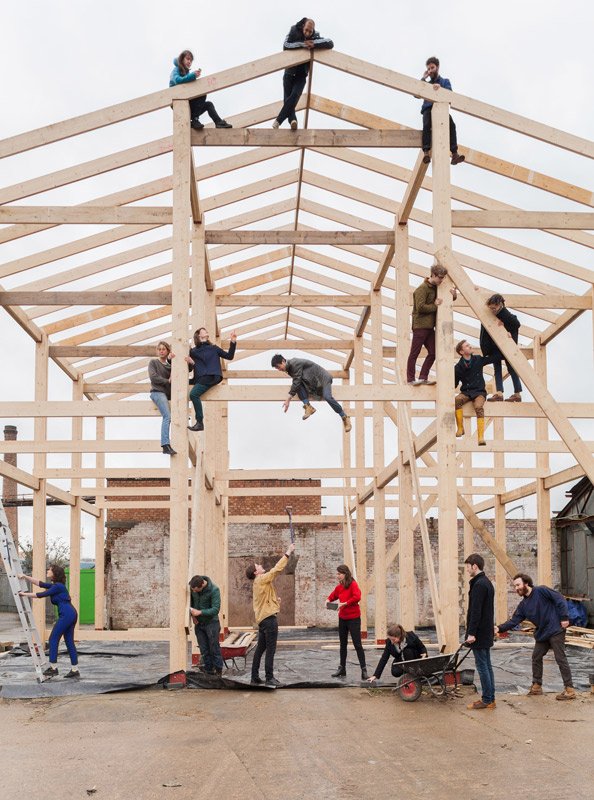
Turner Prize-winning collective Assemble work on multi-disciplinary art and architecture projects with communities, both ‘making things and making things happen’ (Assemble, n.d.). Often focusing on local activisms, such as opposing the demolitions of buildings, ‘the idea that by creating something out of materials and space, you can understand yourself, your surroundings and your companions’ (Moore, 2015), is vital to the work.
By demonstrating a personal awareness of social context, collectives such as these present ways in which artists can facilitate activism on a local level. This is perhaps an example of artists spearheading activism, rather than playing a smaller, but still significant, role in a wider global dissent.
From an environmental perspective, a global ‘re-embracing context’ effort has the potential to be transformative. I find participatory and performative art that reunites the self and the natural world to be an incredibly sensory activity, that subsequently opens up ideas concerning environmentalism. Personal experiences engaging with the numerous biotic communities could lead to individual active efforts in the current environmental emergency.
Anne-Marie Culhane embraces these ideas herself in her artwork; difficult to define, she ‘initiates, catalyses, designs and delivers creative and environmental arts projects, events and gatherings’ (Culhane, n.d.), drawing inspiration from nature cycles, permaculture, people and landscapes.
‘She brings people together into affirmative ways of living by setting in motion dynamic frames of ecology and connection’
Wayne Hill
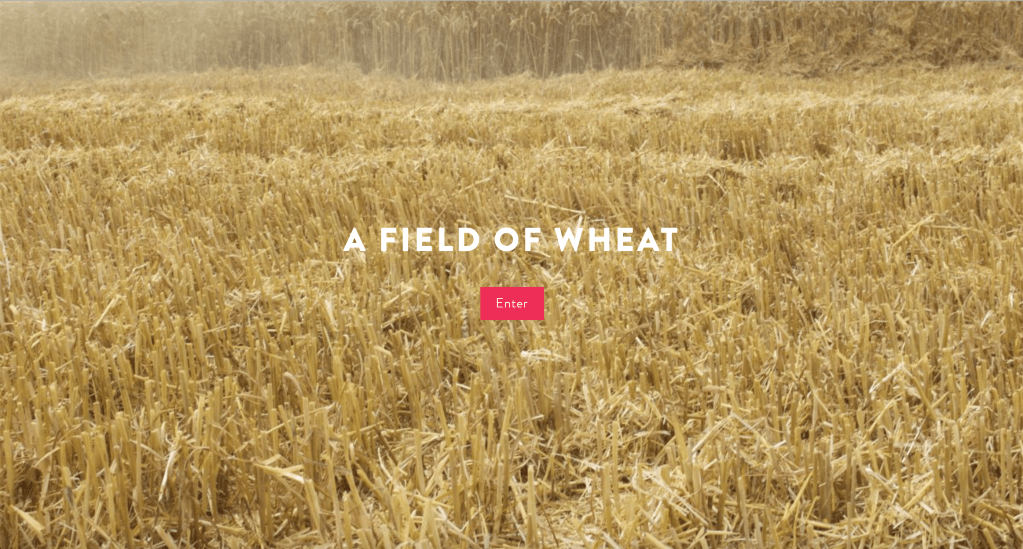
Examples of this include her Field of Wheat project that investigates the step-by-step business of the biggest globally traded commodity, wheat. Dissecting the system, Culhane draws attention to the consumer/supplier relationship and the wider political infrastructure.
In conclusion to this, we can refer to Donna Haraway’s “response-ability”; the ‘cultivation through which we render each other capable’; ‘the capacity to respond’ (Haraway, 2015). If art has a unique ability to de-contextualise and re-contextualise, then as artists, we have both the ability to respond to wider socio-political issues and a responsibility to address the unavoidable ethical dimension that is created.
Sources
Books:
Mesch, C. (2013) Art and Politics. 2nd Ed. New York: I.B.Tauris & Co. Ltd.
Jelinek, A. (2013) This is Not Art: Activism and Other ‘Non-Art’. New York: I.B.Tauris & Co. Ltd.
McQuiston, L. (2015) Visual Impact: Creative Dissent in the 21st Century. London: Phaidon Press Limited.
Downey, A. (2014) Art and Politics Now. London: Thames & Hudson Ltd.
Websites:
Anne-Marie Culhane. About. [online] Available at: https://www.amculhane.co.uk/pages/amabout.htm[Accessed 26th May 2020]
Tate. Socially Engaged Practice. [online] Available at: https://www.tate.org.uk/art/art-terms/s/socially-engaged-practice [Accessed 26th May 2020]
Tate. Turner Prize 2015 artists: Assemble. [online] Available at: https://www.tate.org.uk/whats-on/other-venue/exhibition/turner-prize-2015/turner-prize-2015-artists-assemble [Accessed 26th May]
Tate. Relational Aesthetics. [online] Available at: https://www.tate.org.uk/art/art-terms/r/relational-aesthetics[Accessed 26th May]
Assemble. About. [online] Available at: https://assemblestudio.co.uk/about [Accessed 26th May 2020]
Online Newspaper Articles:
Moore, R. (2015) Assemble: The Unfashionable Art of Making a Difference. The Guardian [online]. November 29 (Accessed May 26th 2020). Available at: https://www.theguardian.com/artanddesign/2015/nov/29/assemble-architecture-collective-london-turner-prize
Online Journal Articles:
Haraway, D. (2015) Anthropocene, Capitalocene, Chthulhucene. Donna Haraway in conversation with Martha Kenney. Art in the Anthropocene: Encounters among aesthetics, politics, environments and epistemologies[online]. Pp. 255-269. Available at: https://katebutlerart.com/wp-content/uploads/2020/05/ee0c9-artanthro_haraway_proof.pdf
 katebutlerart.com
You must be logged in to post a comment.