In investigating the relationship between art and politics, I think it’s vital to consider different socio-political conditions to the Western world; in China, there’s an evident historical connection between art, activism and politics. Although the country has come a long way to becoming a market economy, Communist ideology remains dominant, and one of the most prominent influences of the highly regulated society is the legacy of Chairman Mao Zedong.
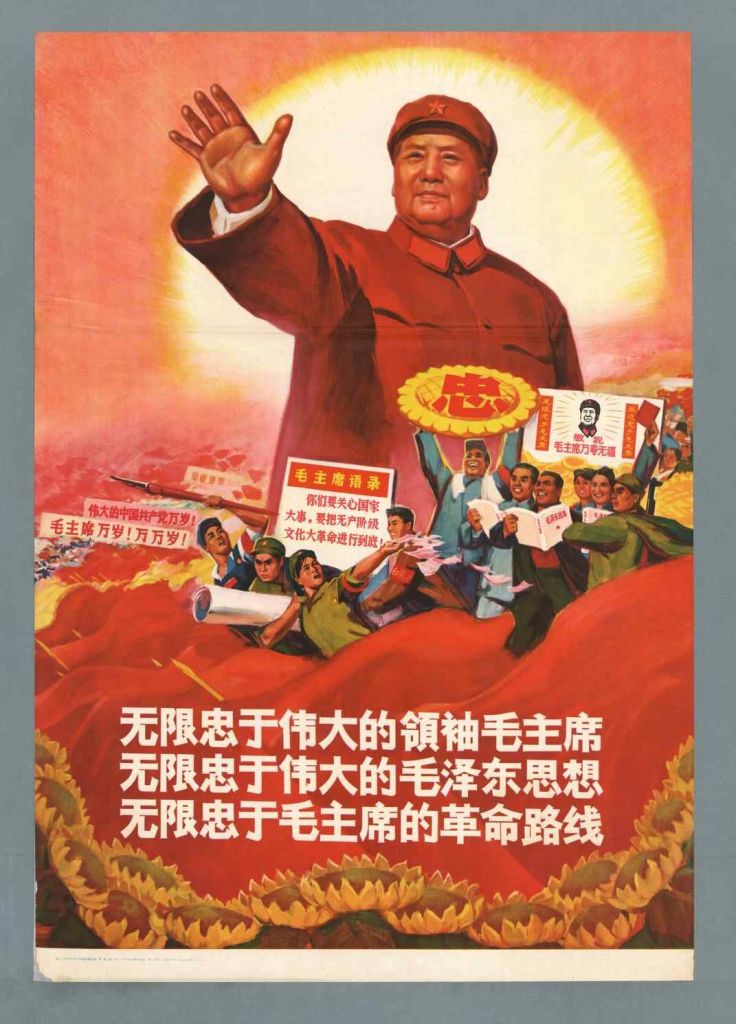
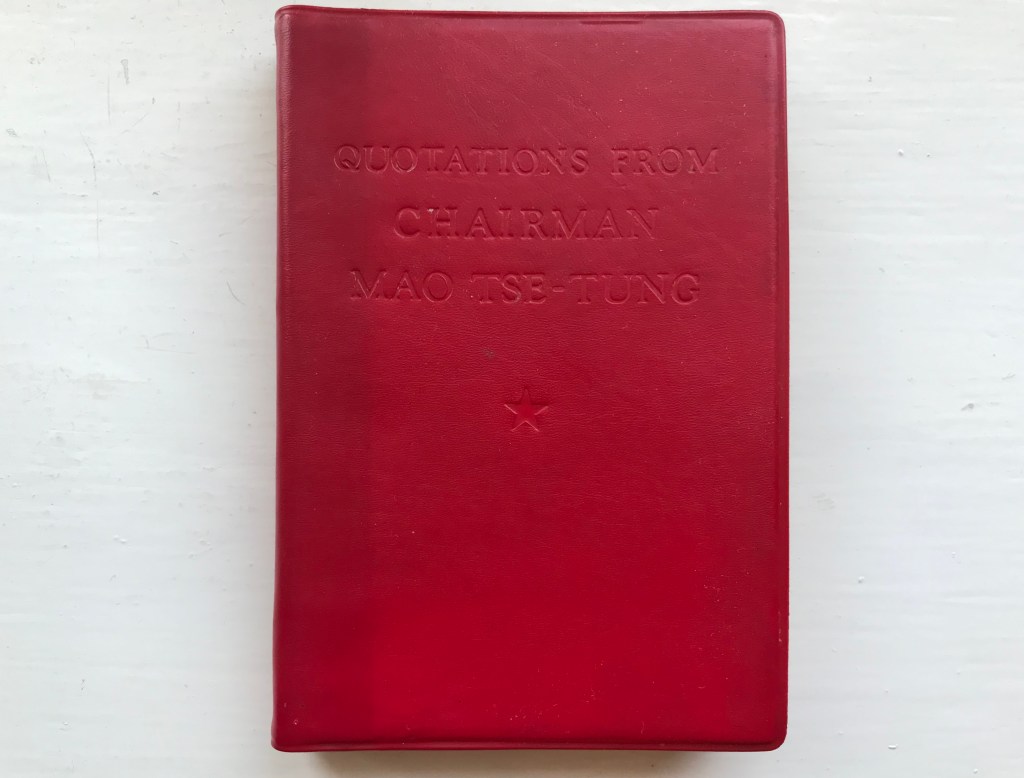
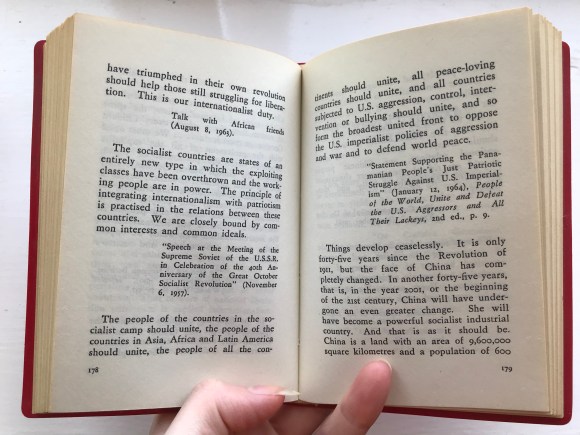
In the period of political chaos and extreme cultural jurisdiction, the Cultural Revolution is an archetypal example of ‘an environment where art was used as a weapon’ (Flath, 2012). Propaganda posters, staged plays and Socialist Realism all aimed to reinforce the extreme cult of personality surrounding Chairman Mao. His image ‘embodied the rising sun, the saviour of China’ (Mittler, 2012) this image repeated endlessly in the form of portraits, quotes (see the Little Red Book), and demonstrating another way that over-saturation can be used to government advantage.
‘Art was expected to contain elements that were “red, bright and shining” to foment revolution’ (RTHK, 2016).
We start to see art as activism on the part of the people at the end of this tumultuous period; the unauthorised Xing Xing (‘Stars’) avant-garde group, formed during the time of the Beijing Spring, produced work that was an act of defiance towards Mao’s past governance and support for the ensuing Democracy Movement. Taking social issues and personal experiences as their subject matter, the group produced non-conformist artwork that deliberately disagreed with state-sanctioned Socialist Realism. The artists were ‘pivotal in initiating some of the first free art expressions in the Post-Mao era’ (10 Chancery Lane). In this context, the line between art that is political commentary and art that is activist is blurred; producing these artworks was an act of disobedience in itself.
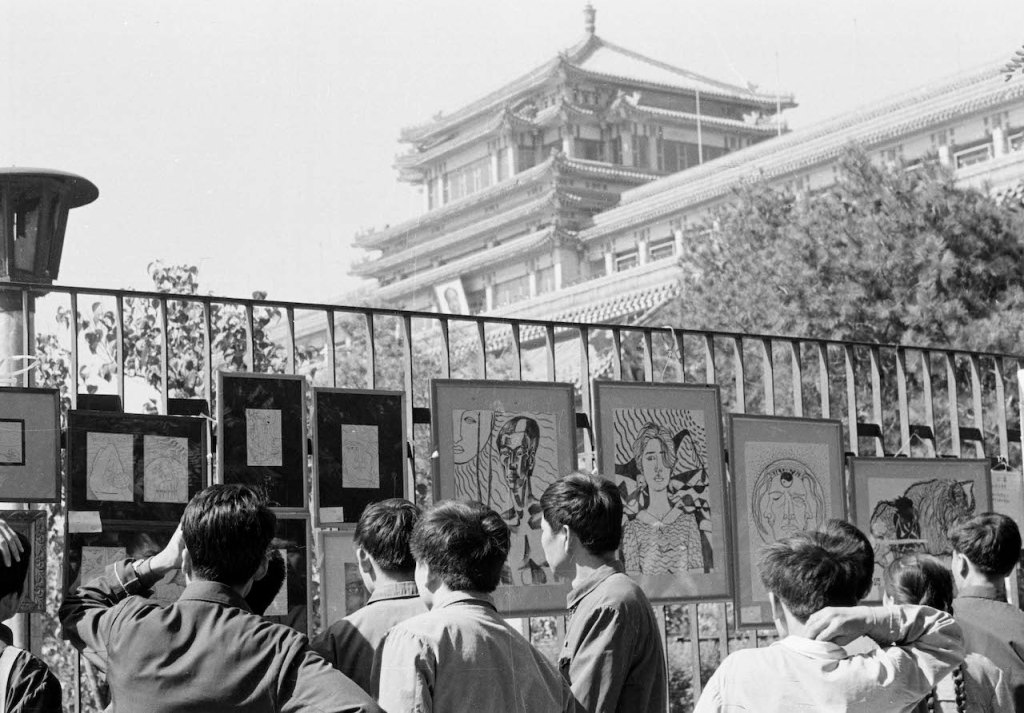
‘The vast possibilities for spreading political protest through emerging technologies became manifest in May 1989 during a series of pro-democracy demonstrations held in Tiananmen Square in Beijing, China.’
(McQuiston, 2015)
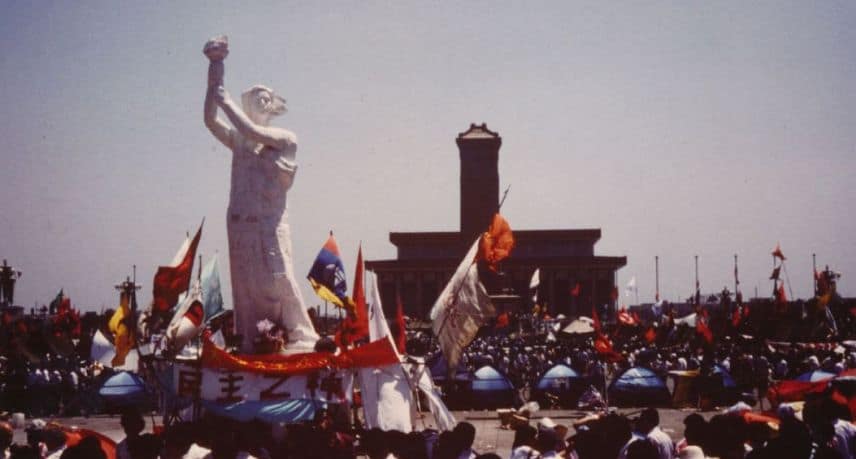
Ten years on, artists established a valuable position in the student-led Tiananmen Square protests of 1989, inspiring much graphic art. A significant example of artistic influence is the 10-metre-tall statue known as the Goddess of Democracy, constructed using foam and papier mâché. When graphic images of the subsequent massacre filled live television coverage across the globe, the statue became an iconic symbol of the democracy struggle in China. Needless to say, this footage was not broadcast in China, and the official death toll of the event remains disputed to this day.
Nothing happened here.
There was no demonstration: there were never
young people singing in this square,
And if there were,
they went home in good order, filing out
at the army’s direction. Or if not,
then you could hardly wonder at what
you say they got.
though they didn’t. Nobody died,
except soldiers in lightly defended
tanks, which were set upon, mob-handed,
by the misguided
counter-revolutionary anarchist
saboteurs (funded by the West
to ferment rebellion), who, as I stressed,
didn’t exist.

Nothing Happened Here - Sheenagh Pugh. A commentary on the attempt made by the government to hide the events of Tiananmen Square.
I think it’s also important to note the global cultural flow between East and West that begins to emerge following these historical events, and the role of the image/motif; notions of internationalism and cultural diversity were, after all, rejected by Maoism.
In connection with the ’68 movements, many popular Mao portraits came into existence, famously Andy Warhol’s work. Returning to China, these images become immensely important among the avant-garde community in the 80s and 90s, who in turn create works such as the satirical “Quaker Oats” Mao (Mittler, 2012).
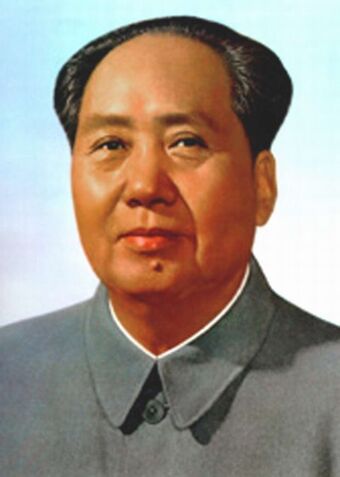
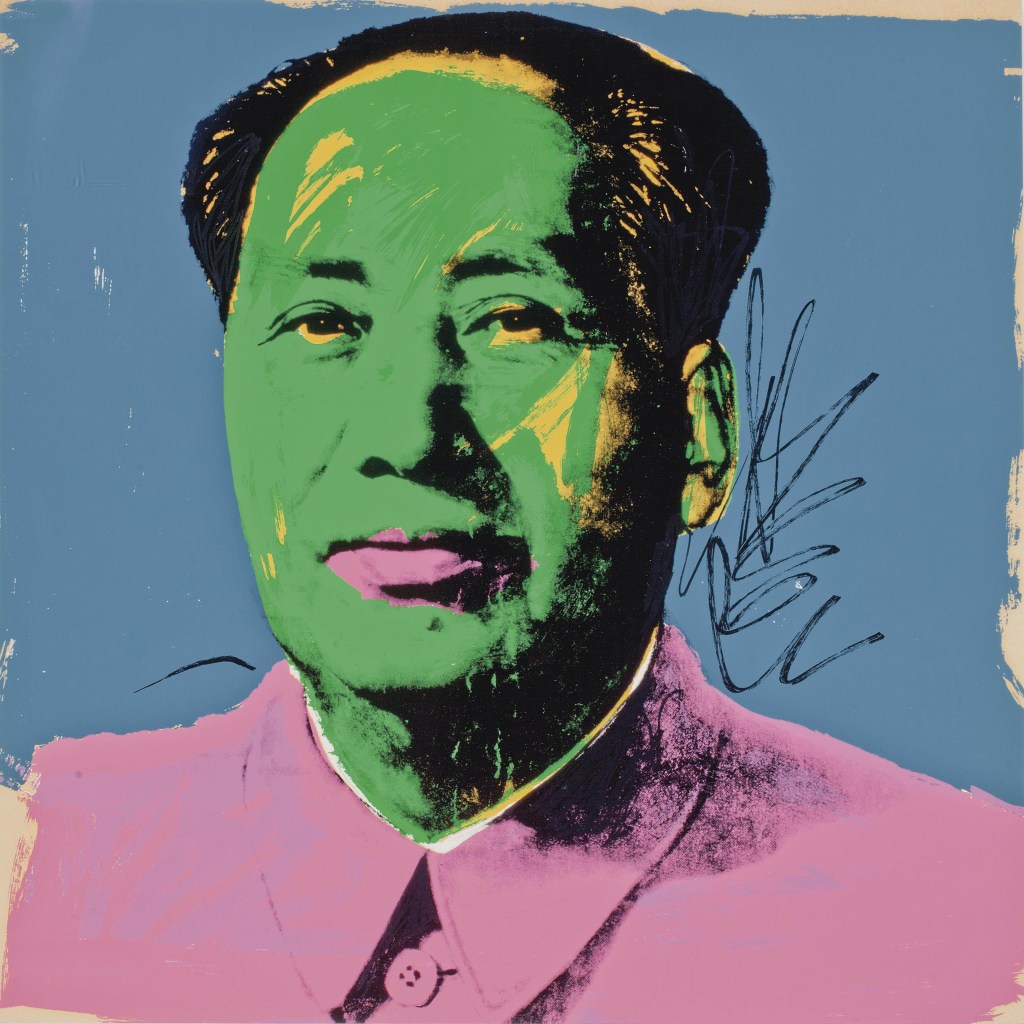
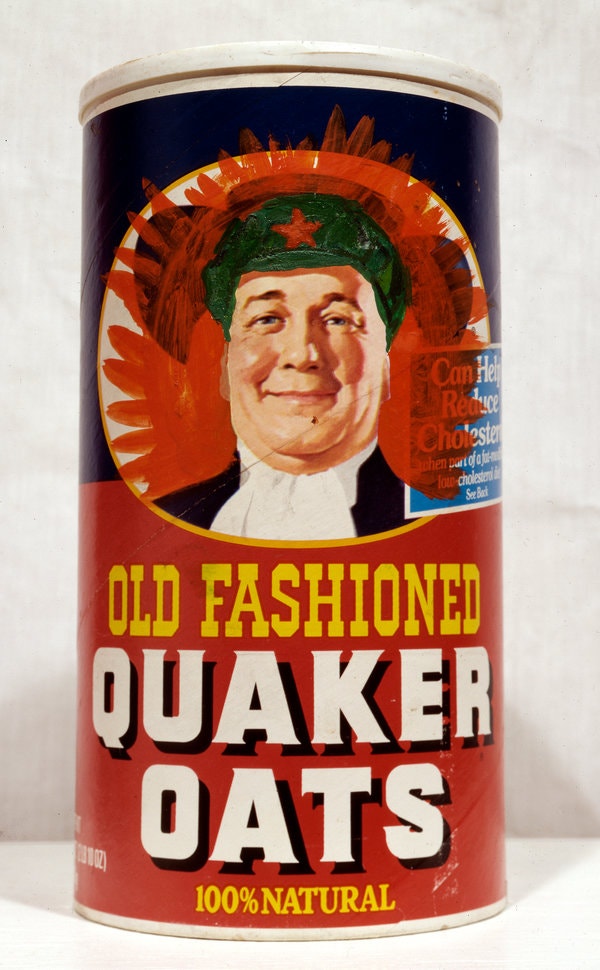
As with recent cyberactivism, the cultural flow of images in accordance with globalisation has an essential role in connecting individuals and spreading activist ideologies.
Sources
Books:
Mesch, C. (2013) Art and Politics. 2nd Ed. New York: I.B.Tauris & Co. Ltd.
Jelinek, A. (2013) This is Not Art: Activism and Other ‘Non-Art’. New York: I.B.Tauris & Co. Ltd.
McQuiston, L. (2015) Visual Impact: Creative Dissent in the 21st Century. London: Phaidon Press Limited.
Downey, A. (2014) Art and Politics Now. London: Thames & Hudson Ltd.
Journal articles:
Flath, J. (2012) Art in Turmoil: The Chinese Cultural Revolution, 1966-76. University of Toronto Quarterly, Vol. 81 (3), pp. 777-779.
Online journal articles:
Yang, G. & Suchan, T. (2009) The Cultural Revolution and Contemporary Chinese Art. Art Education [online]. Vol. 62 (6), pp. 25-32. Available at: https://doi.org/10.1080/00043125.2009.11519042
Esselstrom, E. (2015) Red Guards and Salarymen: The Chinese Cultural Revolution and Comic Satire in 1960s Japan. The Journal of Asian Studies [online]. Vol 74 (4), pp. 953-976. Available at: https://doi.org/10.1017/S0021911815001096
YouTube:
ClusterAsiaEurope 2012. Chinese Propaganda: Mao’s Impact on Contemporary Art [online]. (26th May 2020) Available from: https://www.youtube.com/watch?v=X2Ep14tNj4U
RTHK 香港電台 2016. The Works: Art during and post Cultural Revolution, Ceramic artist, Zoe Coughlan, Gao Xingjian [online]. (26th May 2020) Available from: https://www.youtube.com/watch?v=8WyvRPucbo0
Action Media 2020. ActionMedia ONSITE Stars 1979 | OCAT Institute [online]. (26th May 2020) Available from: https://www.youtube.com/watch?v=Cw94PSLZUTM
AbeBooks.com 2018. The Art of Chinese Propaganda Posters [online]. (26th May 20200 Available from: https://www.youtube.com/watch?v=65jwAN5hdg8
FisherLibrary 2016. Reading Revolution: Art and Literacy During China’s Cultural Revolution [online]. (26thMay 2020). Available from: https://www.youtube.com/watch?v=viMgf4Taw6M
Websites:
10 Chancery Lane Gallery. Wang Keping. [online]. Available at: http://www.10chancerylanegallery.com/artists/main/Wang_Keping/biography_en/
[Accessed 26th May 2020].
Future Learn. Is China a Capitalist or Communist Country?. [online]. Available at: https://www.futurelearn.com/courses/politics-of-economics/0/steps/30823 [Accessed 26th May 2020].
Online Newspaper Articles:
Beam, C. (2015) Beyond Ai Weiwei: How China’s Artists Handle Politics (Or Avoid Them). The New Yorker[online]. March 27 (Accessed May 26th 2020). Available from: https://www.newyorker.com/news/news-desk/ai-weiwei-problem-political-art-china
 katebutlerart.com
You must be logged in to post a comment.