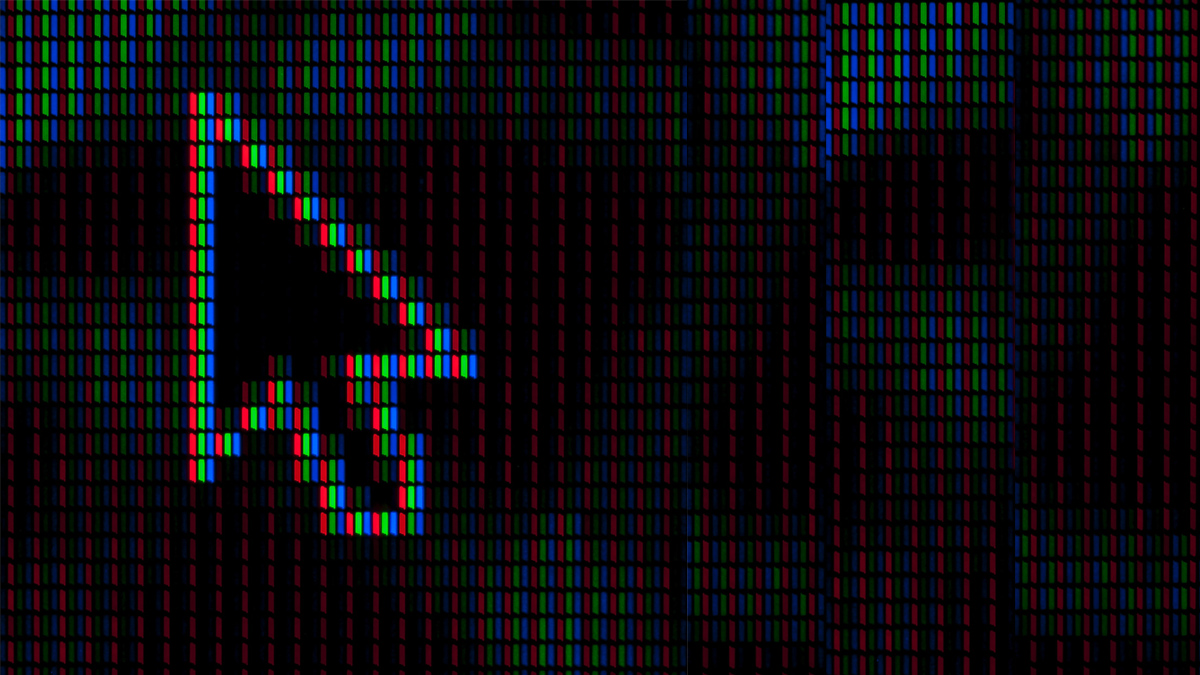
In the modern world, the internet provides a distinctly new historical condition (McQuiston, 2015); individuals on opposing sides of the world can share images and information within milliseconds, regardless of source, reliability, intent or level of expertise. And because of this same heightened interconnectivity, if something goes onto the internet, it rarely comes down.
For activism, this can be a very powerful tool. Not too long ago, the public would know about only that which was presented to them by the state. But with these technological advancements in the early 21st century, the protestor, the militant himself, could send images and videos into the cyberspace and ‘citizen journalism’ was born. It is no coincidence, then, that protests in 2011 spread rapidly across the globe.

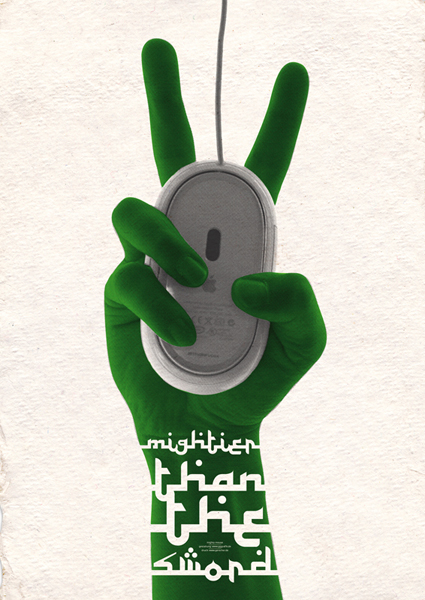
The so-called ‘Year of Revolutions’ brought worldwide uprising; from the Arab Spring to the Occupy movement, there was unprecedented global coverage and an extraordinary visual record of the events is archived.
‘Social media would form a crucial partnership with actions in the streets, and together they would change the face of activism’
McQuiston, 2015
What is also exceptional, was the role social media played in the spread of this revolt. Violence was captured on YouTube in Egypt; posters of Syrian protest were spread on Facebook and photos of Gadaffi’s body went viral across the board. We cannot know if without social media, the riots in London would have spread to Birmingham, Manchester, Liverpool; nor if Occupy would have gone any further than Zuccotti park.
Social media provided platform for the militant image; not a stylised, state-approved photograph, but rather an action shot, drenched in the truth of unfiltered, first-hand experience. Leaked footage from a private drone showing water cannons and tear gas used in Taksim Square, for example, provide a stark reality from a (literally) fresh perspective.
Crucially, the establishment lost the ability to hide information from the public. The internet may be riddled with questionable sources and waves of misinformation, but it has undoubtedly become a ‘major battlefield in the present and future fight for freedom of speech’ (McQuiston, 2015).
Saturation and Aestheticization
This has meant a change in tactics for the mainstream media; it is, after all, not in the interest of any country to promote revolt. Now unable to conceal information, it is hidden in plain sight. Through a sheer bombardment of imagery, the audience becomes desensitised and detached from the same image of a fist in the air.
This over-saturation counterattack is a difficult hurdle for the activist working in visual culture: one cannot stimulate the ‘new’ using images that have been seen over and over again. The artivist must hence consider; how can we activate change in the age of an internet that both facilitates and aestheticises once-powerful imagery?
Sources
Books
Felshin, N. (1995). But is it Art? The Spirit of Art as Activism. Seattle: Bay Press.
Mesch, C. (2013) Art and Politics. 2nd Ed. New York: I.B.Tauris & Co. Ltd.
Jelinek, A. (2013) This is Not Art: Activism and Other ‘Non-Art’. New York: I.B.Tauris & Co. Ltd.
McQuiston, L. (2015) Visual Impact: Creative Dissent in the 21st Century. London: Phaidon Press Limited.
Downey, A. (2014) Art and Politics Now. London: Thames & Hudson Ltd.
Websites
Tate. (n.d.) Internet Art. [online]. Accessed 26th May 2020. Available at https://www.tate.org.uk/art/art-terms/i/internet-art
Tate. (n.d.) Activist Art. [online]. Accessed 26th May 2020. Available at: https://www.tate.org.uk/art/art-terms/a/activist-art
Journal articles
Hung, C. (2013) Citizen Journalism and Cyberactivism in China’s Anti-PX Plant in Xiamen, 2007–2009. China: An International Journal, Vol. 11 (1), pp. 40-54.
Online journal articles
Groys, B. (2014). On Art Activism. E-Flux Journal. [online] Issue 56. Available at: https://www.e-flux.com/journal/56/60343/on-art-activism/
Chamberlain, K. (2004) Redefining cyberactivism: The future of online project. Review of Communication. [online] 4:3-4, 139-146. Available at: https://doi.org/10.1080/1535859042000289397
Videos
TEDx Talks 2016. Cyberactivism In the age of infoxication | David E. Miró | TEDxUPRM. (Accessed 26th May 2020). Available at: https://www.youtube.com/watch?v=b6rmD8Z4pcM
The Guardian 2014. Hong Kong protest 2014: The social media revolution | Report #6. (Accessed 26th ). Available at: https://www.youtube.com/watch?v=MyPi0FYihjE
VOA News 2011. Social Media Fuel Wall Street Protest. (Accessed 26th May 2020). Available at: https://www.youtube.com/watch?v=0Cca6YViKFU
 katebutlerart.com
You must be logged in to post a comment.