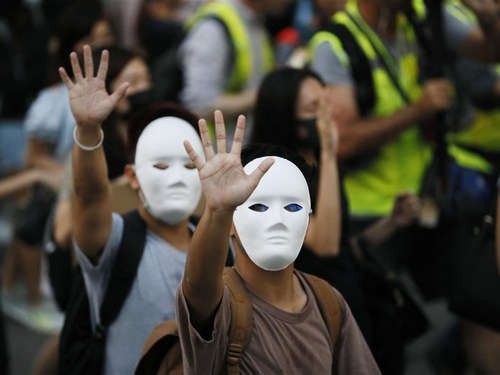
Why does performance have a significant role in activist artwork?
‘Certain assumptions prevail within ‘ethical’ or ‘political’ contemporary practices that stem from the strong Marxist tradition at the heart of many Western avant-garde art practices’
Jelinek, 2013.
Many practices and discourses, particularly in debate surrounding artivism, reference the Marxist ideology that ‘philosophers have only interpreted the world; the point is to change it’. This is where we find praxis: the meeting point of theory and practice. Art that is activist employs the physical action in accordance with the theoretical concept. Where, then, does performativity lie?
Performance, as defined by Elin Diamond, is an ‘embodied act, in a specific site, witnessed by others or the watching self’ (2017). It can be directly associated with concepts of ‘action’ and ‘to act’; it is the emotional and physical engagement with one’s own body and a hyper-awareness of its perceived context.
Performance can act as a bridge between theory and practice, only that the subject of that practice is the human body; a ‘human’ praxis.
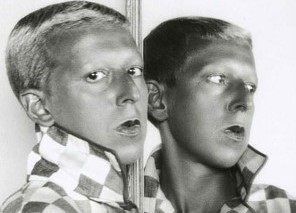
An interesting way to relate to the concept of performance is using Judith Butler’s notion that we are performing every day through our gender roles (1999). If it is recognised that this is a learned behaviour, an everyday performance, then it can contribute to a self-awareness of body and context that can facilitate an activist mentality.
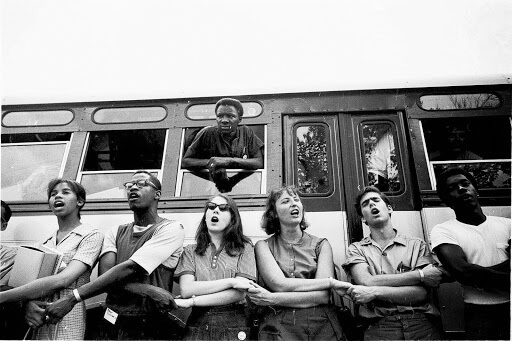
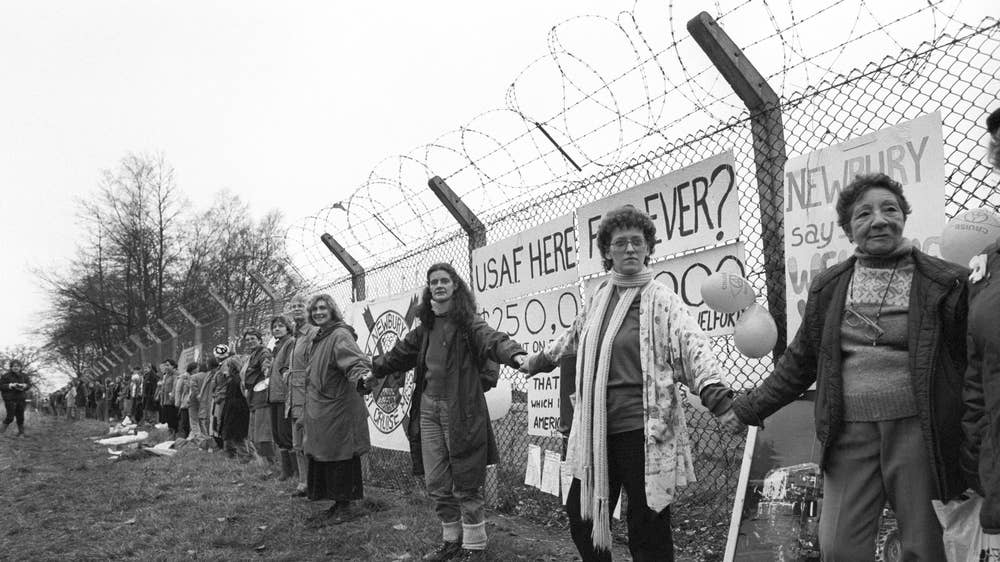
When stripped to its raw form, protest, in many cases, takes the shape of a collection of bodies; bodies that are bound by laws and shielded by human rights. It is this fundamental power that is often channelled in performance art.
In 1968, Yayoi Kusama performed her nude piece ‘Anatomic Explosion on Wall Street’ as a protest against the Vietnam War and its capitalist engine. Additionally, the shock factor of this work is what caused a disruption; performance has this ability because it recognises the performativity, the learned socially acceptable/unacceptable behaviours, of everyday Western life. Disruption is a fundamental tool for the activist.

In June 2013, amidst the #OccupyGezi protests in central Istanbul, Erdem Gündüz stood still in Taksim Square for over six hours, staring at a giant portrait of Mustafa Kemal Atatürk, the founding father of the Turkish Republic (McQuiston, 2015). Over time, Gündüz was joined in solidarity by hundreds. Participation in art uses the audience’s body and allows them to become relevant to a particular theme, whilst giving strength to the protest.
‘Performance art is a radical type of active art that pushes the body… to the very limits of human experience’
Klein
Sources
Books
Diamond, E. (ed.) (2017). Performance, Feminism and Affect in Neoliberal Times. London: Palgrave Macmillan.
Butler, J. (1999). Gender Trouble. Great Britain: Routledge.
Felshin, N. (1995). But is it Art? The Spirit of Art as Activism. Seattle: Bay Press.
Mesch, C. (2013) Art and Politics. 2nd Ed. New York: I.B.Tauris & Co. Ltd.
Jelinek, A. (2013) This is Not Art: Activism and Other ‘Non-Art’. New York: I.B.Tauris & Co. Ltd.
McQuiston, L. (2015) Visual Impact: Creative Dissent in the 21st Century. London: Phaidon Press Limited.
Downey, A. (2014) Art and Politics Now. London: Thames & Hudson Ltd.
Journal articles
Rivetti, P. (2013) Empowerment without Emancipation: Performativity and Political Activism among Iranian Refugees in Italy and Turkey. Alternatives: Global, Local, Political, Vol. 38 (4) pp. 305-320.
Huarcaya, S. M. (2015) Performativity, Performance, and Indigenous Activism in Ecuador and the Andes. Comparative Studies in Society and History, Vol. 57 (3) pp. 806-837.
Weiwei, A. (2020) Politics and Performance. Theatre Survey, Vol. 61 (1) pp. 1-3.
Online newspaper articles
Jessen-Peterson, N. (2012) The Power of Performance: Art as Political Activism. Tufts Observer [online]. October 22 (Accessed 26th May 2020). Available from: http://tuftsobserver.org/the-power-of-performance-art-as-political-activism/
Websites
Tate. Performance Art: The angry space, politics and activism. [online] (Accessed 26th May 2020). Available from: https://www.tate.org.uk/art/art-terms/p/performance-art/angry-space-politics-and-activism
Tate. (n.d.) Activist Art. [online]. Accessed 26th May 2020. Available at: https://www.tate.org.uk/art/art-terms/a/activist-art
Videos:
Tate 2018. Performance and Protest: Can Art Change Society? How Art Became Active. Ep. 5 of 5. TateShots.[online] (26th May 2020) Available from: https://www.youtube.com/watch?v=XGy9yJN12lo
Tate 2018. Why Dance in a Museum? How Art Became Active. Ep. 1 of 5. TateShots. [online] (26th May 2020) Available from: https://www.youtube.com/watch?v=BluWOjovJHk
The Art Assignment 2016. The Case for Performance Art. The Art Assignment. PBS Digital Studios. [online] (Accessed 26th May 2020). Available from: https://www.youtube.com/watch?v=EmMTKdUAokM
 katebutlerart.com
You must be logged in to post a comment.