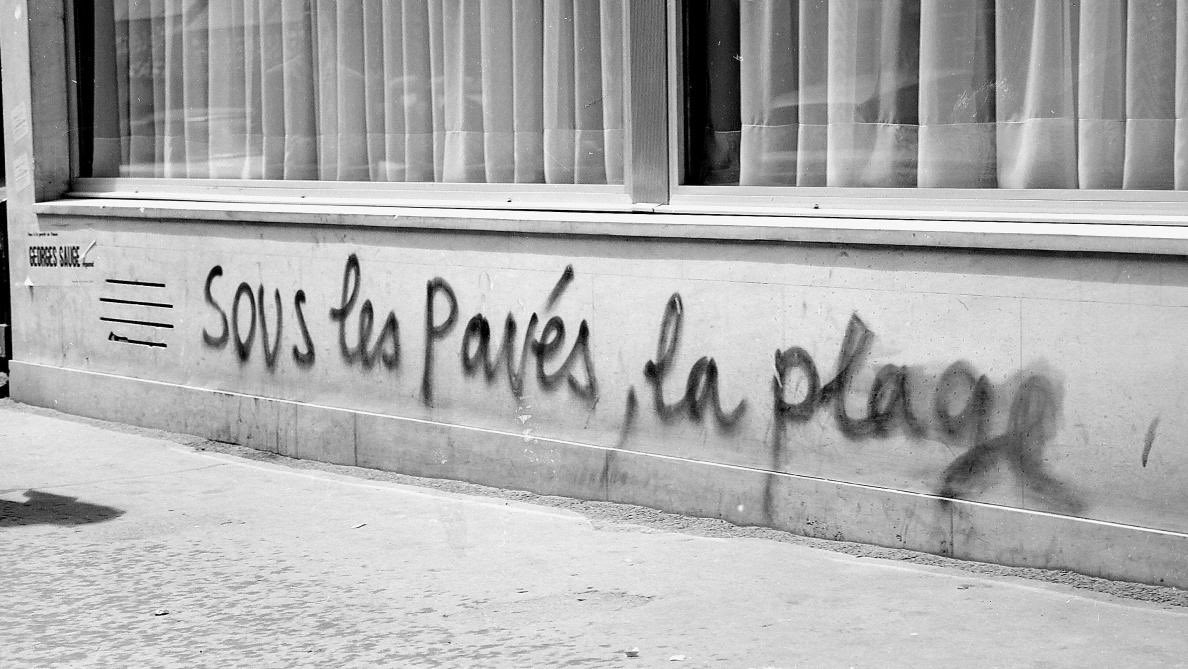
A New Activist Cultural Practice
In an age of ever-developing digitalisation, ease of international mass-movement and everyday weaving of divergent cultures, it is more important than ever before for artists to consider their work on an unavoidably global stage.
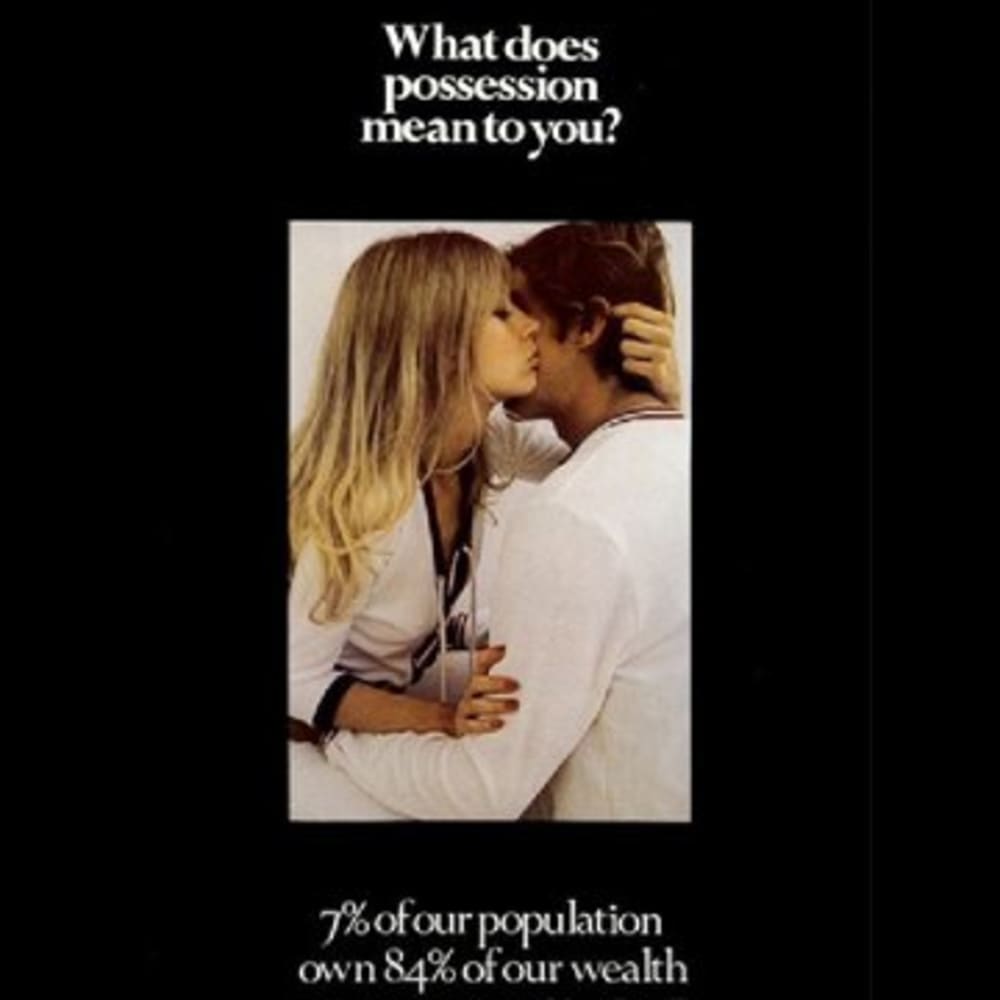
‘Artists cannot afford for a moment longer to operate in a vacuum of specialised discourse without considering their function in wider and more utilitarian terms’
Cork, editorial of Art and Social Purpose issue of Studio International, 1976
It seems that today, it is not enough for art, with its rich history of ambitions to effect social transformation, to observe the world from the windows of an ivory tower, but to become an active means in realising these ambitions.
[Artivism] is effective in disrupting the smooth image that corporate capitalism is trying to impose
Chantal Mouffe
There are, of course, a host of complexities that form at the interface of art and activism. Boris Groys argues ‘Art activists do want to be useful, to change the world, to make the world a better place—but at the same time, they do not want to cease being artists’ (2014). Does being an artist set you outside the frameworks of society? If so, Groys is correct is suggesting that ‘being’ an ‘artist’, hence having a particular privilege, perhaps limits one’s capacity to effect real change because of a lack of engagement.
Similarly, if ‘art’ is a separate fact, existing within its own space, then it does follow that artistic activism can be considered irrelevant; reduced to spectacle. ‘Art cannot be used as a medium of a genuine political protest—because the use of art for political action necessarily aestheticizes this action’ (Groys, 2014). An infamous example of such, Occupy activists took part in the 2012 Berlin Biennale, later referred to by the public as ‘kitschy’; ‘a human zoo’ (Maak, 2012). ‘Did the movement give up its political momentum for the sake of aesthetic quality?’ asks writer Sebastian Loewe (2015). The Occupy movement did not continue much further.

The art market, too, is a complexity of artistic activism; the market is one of the biggest money-driven examples of capitalism globally, raising issues of commodification. Certain artists, such as Damien Hirst and Tracy Emin, take pride in making their millions. Many artists, however, work towards resisting absorption by the marketplace, deliberately creating work that is ‘unfinished’, ‘unattractive’ or ‘may scarcely exist’ (Moszynska, 2013). Perhaps this is with an anti-capitalist agenda, or in favour of a more diverse art world, wherein collectors cannot influence the direction of museums, or where the higher prices are not typically paid for works by male artists.
Anthony Downey, however, suggests ‘the existence of artists within economic systems means they can often be more effective in drawing attention to the broader economic demands involved in producing art’ (2014). The art market demonstrates that artists do exist within the frameworks of society; suggesting, maybe, that this aestheticization of activist practices is not a failure of the practitioner but a technique of the opposition in quelling their political objectives.
Art as activism is a relatively new (arguably modern) phenomenon; I intend to investigate this ‘remarkable hybrid’ (Felshin, 1995). One of many contemporary roles in society, the artist as the ethnographer, the researcher, the educator, the social commentator, the artist is now the activist; and they’re going to have to get creative.
Sources
Books
Felshin, N. (1995). But is it Art? The Spirit of Art as Activism. Seattle: Bay Press.
Mosynska, A. (2013). Sculpture Now. London: Thames and Hudson Ltd.
Mesch, C. (2013) Art and Politics. 2nd Ed. New York: I.B.Tauris & Co. Ltd.
Jelinek, A. (2013) This is Not Art: Activism and Other ‘Non-Art’. New York: I.B.Tauris & Co. Ltd.
McQuiston, L. (2015) Visual Impact: Creative Dissent in the 21st Century. London: Phaidon Press Limited.
Downey, A. (2014) Art and Politics Now. London: Thames & Hudson Ltd.
Online journal articles
Groys, B. (2014). On Art Activism. E-Flux Journal. [online] Issue 56. Available at: https://www.e-flux.com/journal/56/60343/on-art-activism/
Loewe, S. (2015). When Protest Becomes Art: The Contradictory Transformations of the Occupy Movement at Documenta 13 and Berlin Biennale 7. Field Journal. [online] Issue 1. Available at: http://field-journal.com/issue-1/loeweFarrington, K. (2013). The Failure of Aesthetics in the Occupy Movement. Artcore Journal. [online]. Vol. 1, Issue 2. Available at: https://artcorejournal.net/2013/01/23/the-failure-of-aesthetics-in-the-occupy-movement-seen-through-the-lens-of-the-7th-berlin-biennale-by-kate-farrington/
Online Newspaper Articles:
Maak, N. (2012). Kritik der zynischen Verunft. Frankfurter Allgemeine Zeitung. [online]. May 9 (Accessed 26thMay 2020). Available: www.faz.net/berlin-biennale-kritik-der-zynischen-vernunft-11731589.html
Journals
Cork. (1976) Art and Social Purpose in the 70s and 80s: the ‘unfinished agenda’ of social realism. Studio International, Vol. 191, No. 980. pp. 94.
Websites
Tate. (n.d.) Activist Art. [online]. Accessed 26th May 2020. Available at: https://www.tate.org.uk/art/art-terms/a/activist-art
 katebutlerart.com
You must be logged in to post a comment.